Pros & Cons of Full Height Kitchen Cabinets
July 15, 2024
Floor-to-ceiling cabinets look stunning but aren't right for every kitchen. Here's what to consider before committing.
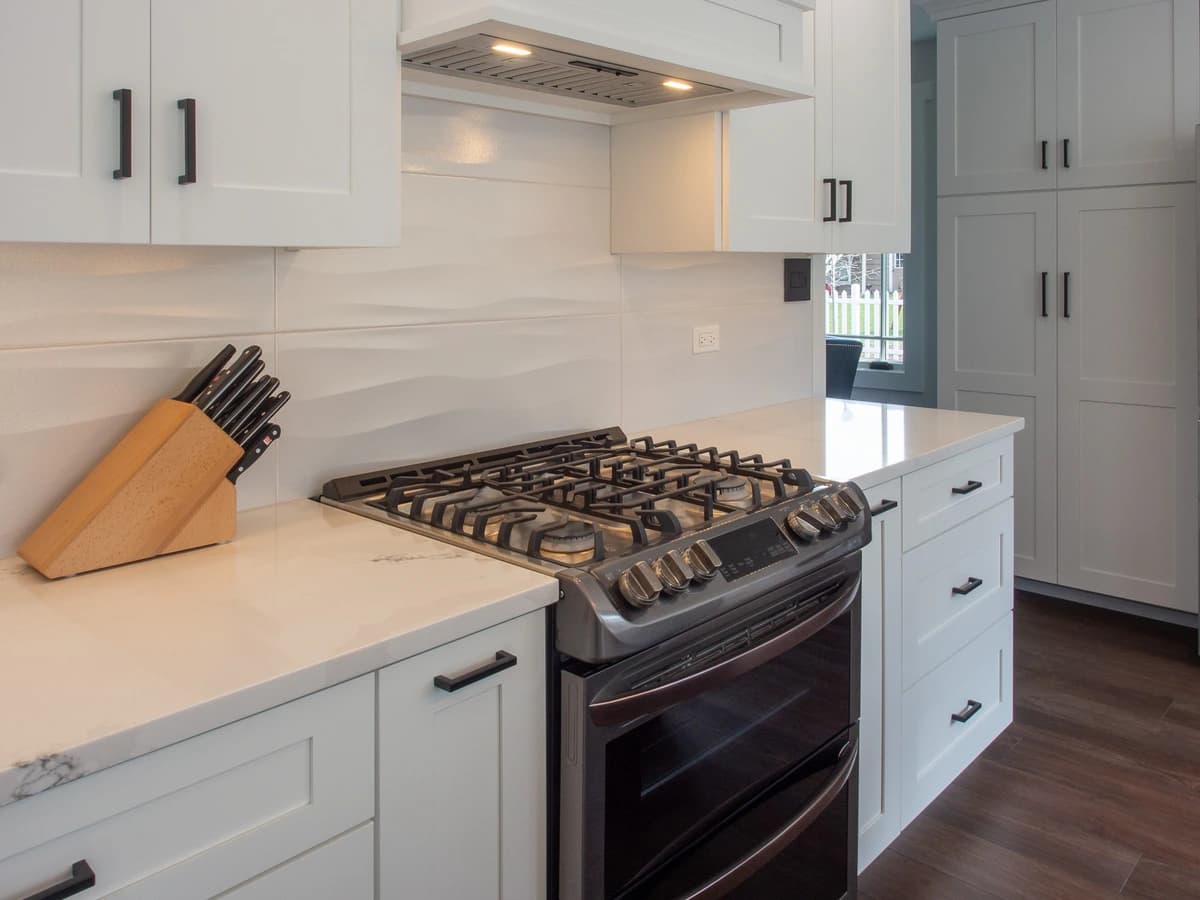
Full-height kitchen cabinets — also called floor-to-ceiling or tall cabinets — run from the countertop (or floor) all the way to the ceiling with no gap above. They've become one of the most requested features in high-end kitchen remodels, and it's easy to see why: the look is dramatic, the storage is exceptional, and the visual impact is immediate.
But they aren't the right choice for every kitchen or every homeowner. Before you commit, here's an honest breakdown of what you gain — and what you give up.
The Pros of Full-Height Kitchen Cabinets
Maximum Storage Space
The most practical argument for full-height cabinets is pure storage capacity. Standard wall cabinets typically stop 12–18 inches below the ceiling, leaving a dead zone that collects dust and rarely gets used productively. Full-height cabinets reclaim that space entirely.
In a typical kitchen, that translates to an additional 20–30% of cabinet volume — enough to store bulky items like stand mixers, large stockpots, seasonal serveware, and overflow pantry goods. For families who entertain frequently or have modest kitchen footprints, this extra capacity can be transformative. You can finally get everything off the countertop.
A Cleaner, More Polished Look
From a design standpoint, the continuous vertical line from countertop to ceiling is one of the most powerful moves in kitchen design. It creates a sense of intentionality — every inch of the wall has been considered and used — and eliminates the awkward, unfinished quality of a floating cabinet bank.
In kitchens with ceilings above 9 feet, full-height cabinets are especially effective. The vertical draw makes the room feel taller, and the unbroken surface gives the kitchen a custom, built-in quality that's hard to replicate with standard cabinetry. Paired with integrated appliance panels or handleless doors, the result is a kitchen that looks like it was designed from scratch, not assembled from a catalog.
No More Dust Traps
The top of standard wall cabinets is a notoriously difficult surface to keep clean. Grease from cooking migrates upward and settles on anything horizontal; combined with dust, it forms a grimy film that requires frequent, awkward scrubbing. Many homeowners simply ignore that surface — until guests notice.
Full-height cabinets eliminate the problem entirely. There's no exposed horizontal surface above the doors, so there's nothing to collect grease or grime. Your kitchen stays cleaner with less effort, and you won't find yourself standing on a step stool with a degreaser before every dinner party.
Increased Home Resale Value
Buyers consistently rank kitchen quality as the top factor in purchase decisions, and custom cabinetry is one of the first things they notice. Full-height cabinets signal craftsmanship and quality; they're a feature that photographs well and shows well during tours. In the Chicago suburbs, where kitchens are a major competitive differentiator in the resale market, upgraded cabinetry consistently delivers strong ROI — often recovering 70–80% of cost at resale according to Remodeling Magazine's annual Cost vs. Value report.
The Cons of Full-Height Kitchen Cabinets
Higher Upfront Cost
Full-height cabinets require more material, more precise installation, and often custom sizing to fit your ceiling height. Compared to standard wall cabinets, expect to pay 25–40% more for the cabinet boxes alone — and the installation labor increases proportionally because the work is more complex and requires more exacting alignment.
For homeowners with a fixed remodeling budget, this cost difference is real and worth planning for. It's not a reason to avoid them, but it is a reason to get accurate quotes early so the choice doesn't crowd out other priorities (like appliances or countertops).
The Upper Shelves Are Hard to Reach
The added storage only works if you can access it. Shelves above roughly 7.5 feet are out of comfortable reach for most adults, which means a step stool or small ladder becomes a kitchen fixture. For items you use regularly — everyday dishes, glasses, spices — this is genuinely inconvenient.
The practical solution most homeowners land on is zoning: reserve the upper third of full-height cabinets for rarely-used items (holiday serving pieces, extra appliances, bulk pantry stock) and keep everyday items at accessible heights. With thoughtful organization, the accessibility issue becomes manageable — but it requires planning upfront rather than just loading shelves organically.
Can Overpower Smaller or Low-Ceiling Kitchens
Full-height cabinets work best with ceiling heights of 9 feet or more. In kitchens with 8-foot ceilings or smaller footprints, they can create a hemmed-in feeling — walls of cabinetry that seem to press inward rather than open the space up. The vertical lines that feel dramatic in a large kitchen can feel imposing in a tight one.
If you're working with a smaller kitchen, the better approach is often a hybrid layout: full-height pantry towers or tall accent cabinets flanking the range, combined with standard wall cabinets elsewhere. You get the visual drama and extra storage where it counts, without overwhelming the room.
Installation Is More Complex
Standard wall cabinets can be hung by an experienced crew relatively quickly. Full-height cabinets require careful ceiling-height measurement, precise scribing to account for ceiling variations (few ceilings are perfectly level), and often custom filler pieces. In older Chicago-area homes — which frequently have ceilings that have shifted over decades — this adds time and cost.
It also means that if your ceiling isn't perfectly level (and it usually isn't), the installer needs to address that gap cleanly. A poor installation with visible scribe lines or uneven tops undoes the aesthetic benefit entirely. This is a job that rewards working with an experienced cabinet installer, not a corner-cutting one.
Is Full-Height Cabinetry Right for Your Kitchen?
A few questions worth considering before you decide:
Ceiling height — Above 9 feet, full-height cabinets are almost always worth it. Between 8 and 9 feet, they work but require tighter design coordination. Below 8 feet, a hybrid approach usually serves better.
How you use your kitchen — If you cook and entertain regularly, the extra storage pays dividends. If your current cabinets are half-empty, the added space may not justify the cost.
Your timeline in the home — If you're planning to sell in the next 3–5 years, full-height cabinetry is a genuine differentiator in the Chicagoland market. If this is a long-term home, make the decision based purely on how you live in the space.
Your layout — Open-plan kitchens visible from living areas benefit most from the polished, furniture-like quality of full-height cabinetry. Galley kitchens or those with lots of windows may have less wall space to work with.
Our Take
Full-height kitchen cabinets are one of the highest-impact upgrades available in a kitchen remodel — when the space is right for them. They're not a universally correct choice, but in the right kitchen, they elevate the entire room in a way that standard cabinetry simply can't match.
Bayern Builders has been designing and installing custom kitchen cabinetry across the western Chicago suburbs since 1996. Whether you're leaning toward full-height, a hybrid approach, or standard wall cabinets, we can help you weigh the tradeoffs against your specific kitchen layout and budget. Contact us for a free consultation.